
One-Pot Fall Stews that Busy Moms Can Brew with Their Kids

Fall has a way of making everyone crave something warm, hearty, and low-effort — and few dinners deliver on all three like a one-pot stew. But stew season is also one of the best times of year to pull kids into the kitchen. The slow, forgiving nature of stew makes it perfect for little hands: there's time to measure, stir, and ask questions without anything burning if a step takes an extra few minutes.
Here's a roundup of the stew styles dominating fall menus this year, along with age-appropriate jobs for kids and the learning packed into each one.
Why stew is the perfect kitchen classroom
Unlike a quick stir-fry or a delicate sauce, stew has built-in patience. That slow simmer buys real time to let a child measure a cup of broth, name the vegetables going into the pot, or watch how heat changes a raw carrot into a soft one. It's hands-on math, science, and fine motor practice disguised as dinner — and at the end of it, there's a meal the whole family made together.
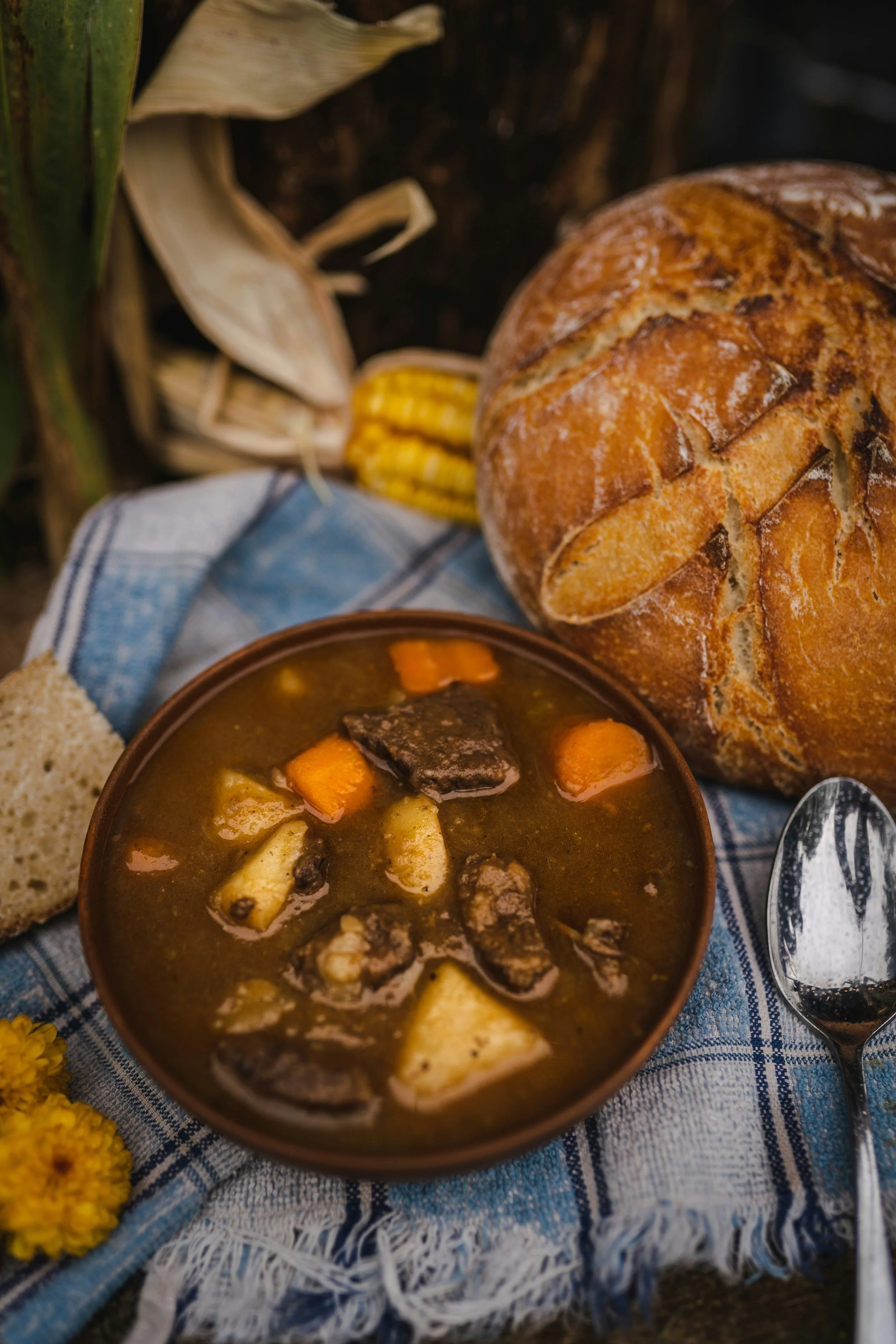
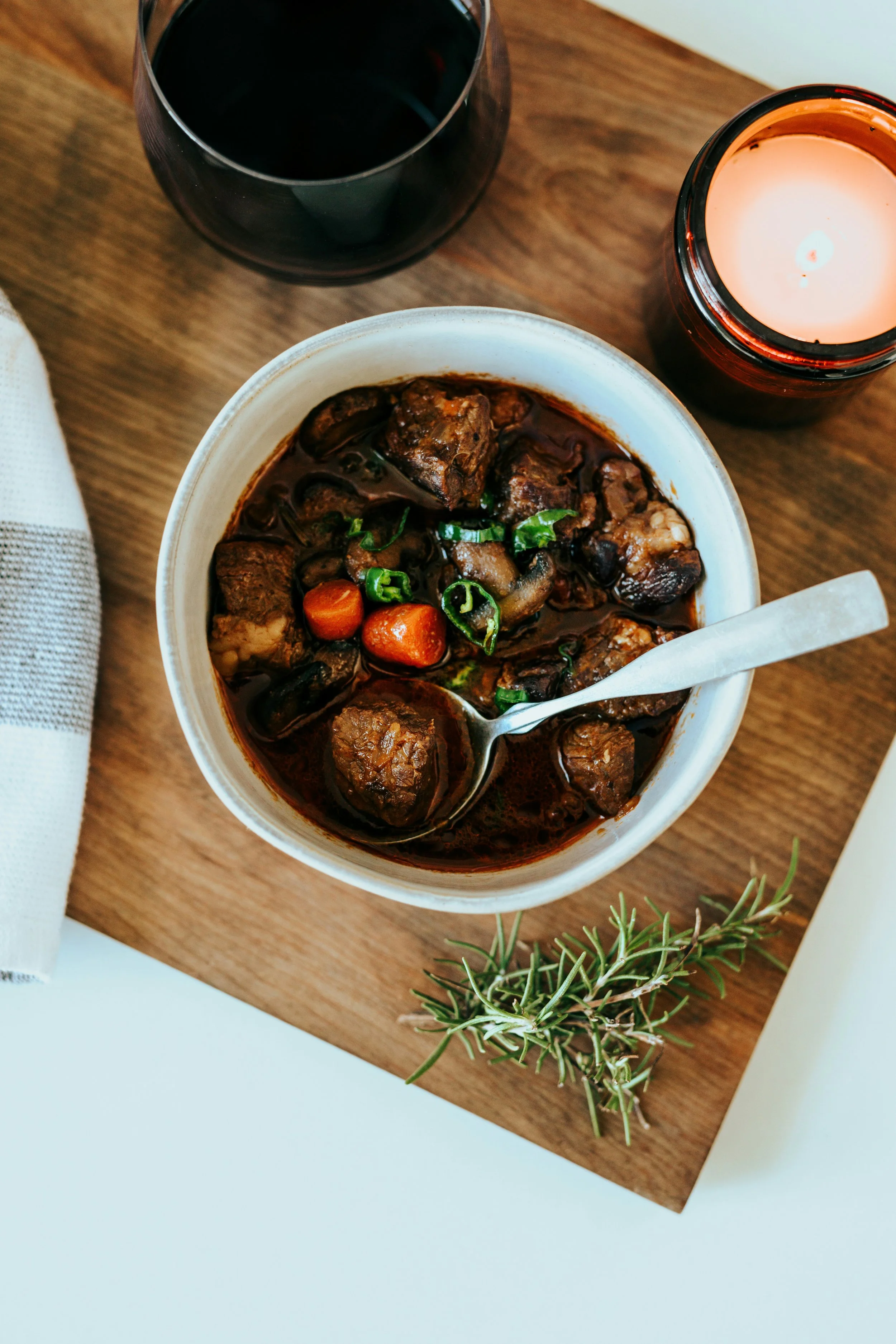
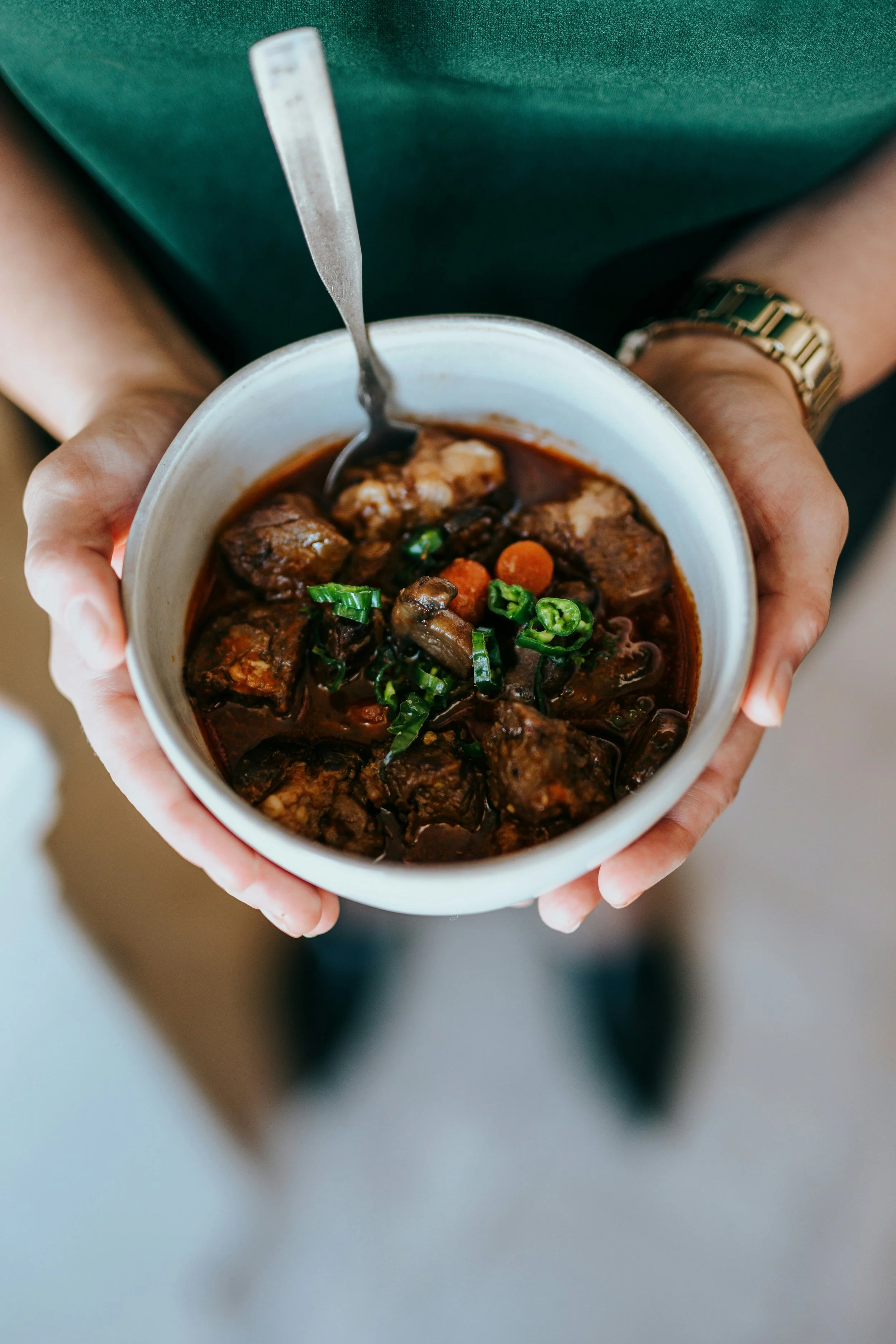
Classic Beef Stew by Down Shiftology
The stews to try this season — and how to involve your kids
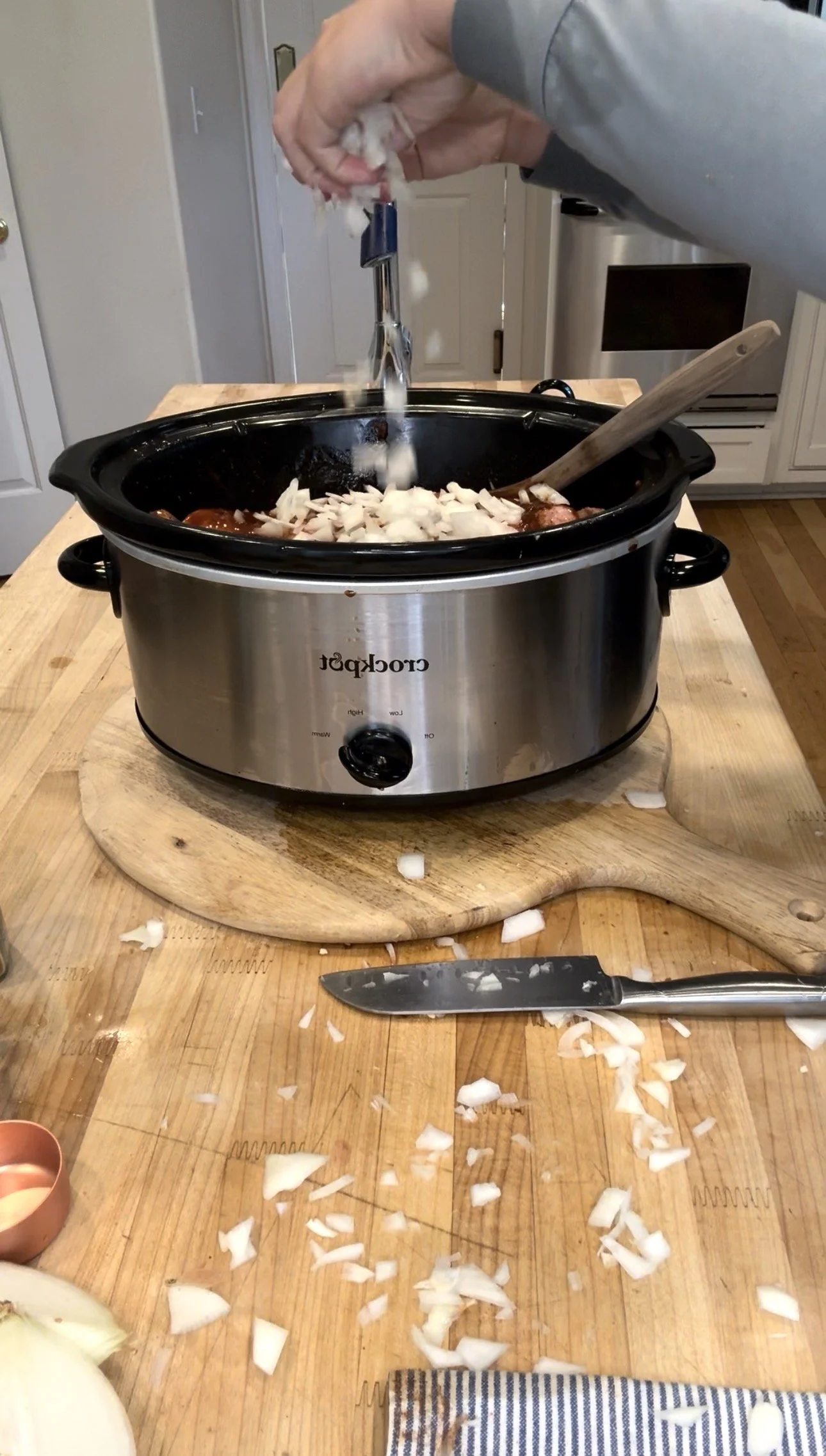
Classic Beef Stew. (we chose to recommend Down Shiftology) This one earns its spot as the season's anchor dish because it's endlessly reliable — a well-marbled cut like chuck roast gets seared first to build a deep, browned flavor, then goes into the pot with onions, carrots, and potatoes to simmer low and slow for a few hours until the meat is fork-tender and the vegetables have soaked up all that broth. It's the kind of stew that tastes even better the next day, which makes it a great Sunday project with leftovers built in for a busy Monday or Tuesday.
Kid job: Peeling carrots and potatoes with a kid-safe peeler is a great fine-motor task for ages 5 and up — it takes some hand strength and coordination to get the pressure right, and it's low-risk if they miss a spot (unlike a knife task). Once everything's peeled and chopped into chunks, have them help count the pieces going into the pot — counting by fives or tens if they're a little older. It's a small, natural way to fold in math practice without it feeling like a lesson. You can also ask them to sort the vegetables by color or size before they go in, which adds a simple pattern-recognition element for younger kids.
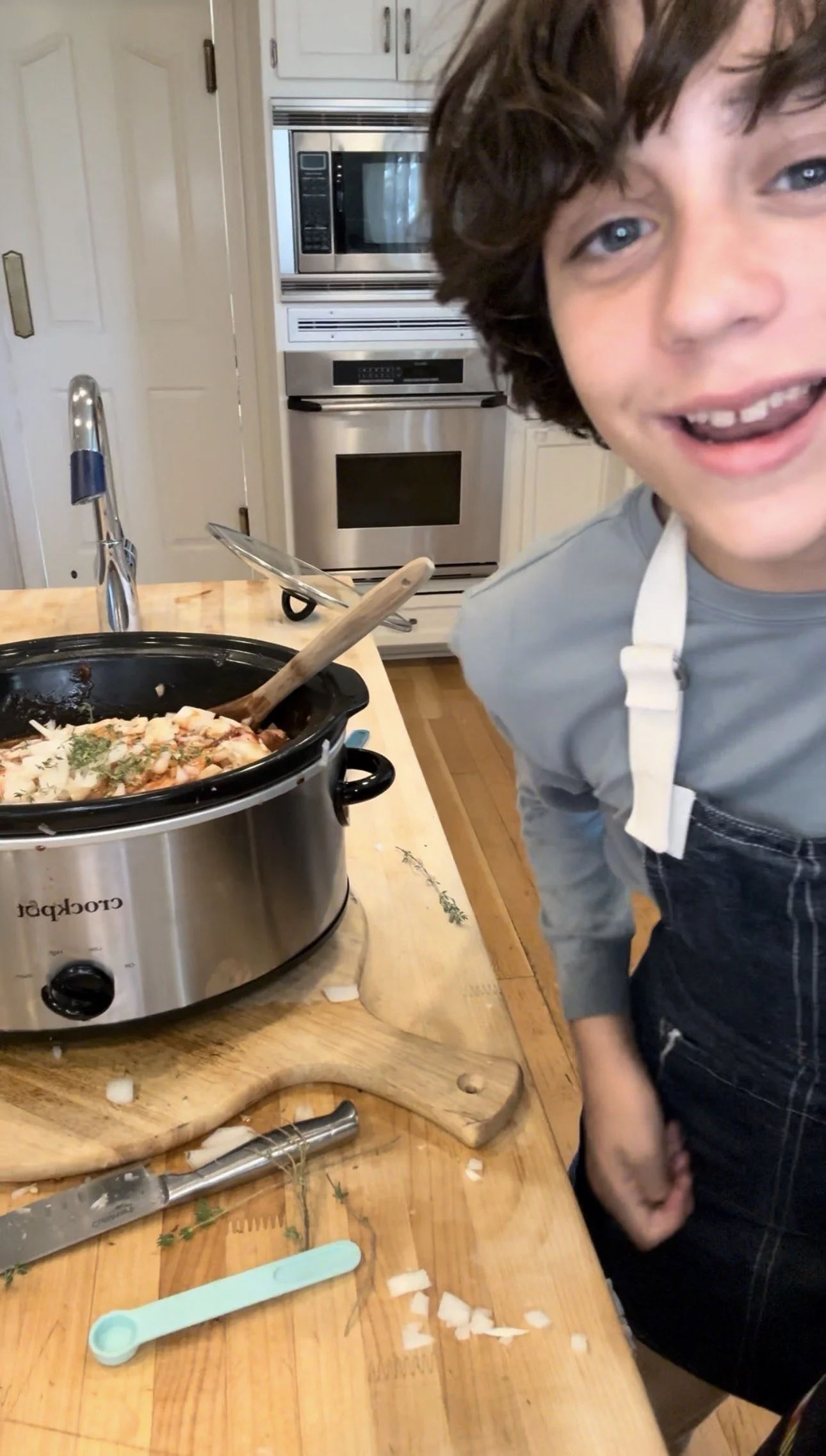
Slow Cooked Corned Beef and Cabbage. This is the one that shows up every fall in our house — a fall family stew staple I've made countless times with my son Orion by my side. It starts with a well-brined corned beef brisket, simmered low and slow with onions, carrots, and potatoes until the meat turns tender enough to pull apart with a fork, then cabbage wedges go in near the end so they soften without turning to mush. The broth picks up all that peppery, briny flavor from the corned beef spice packet, which makes the whole kitchen smell like fall by the time it's done.
Kid job: Orion's job is usually peeling the carrots and potatoes — great practice for hand strength and coordination — and then helping count out the cabbage wedges as they go into the pot. It's become a bit of a tradition at this point: he knows exactly which step is his, and there's something nice about a recipe simple enough that a kid can own a real part of it every single time we make it.
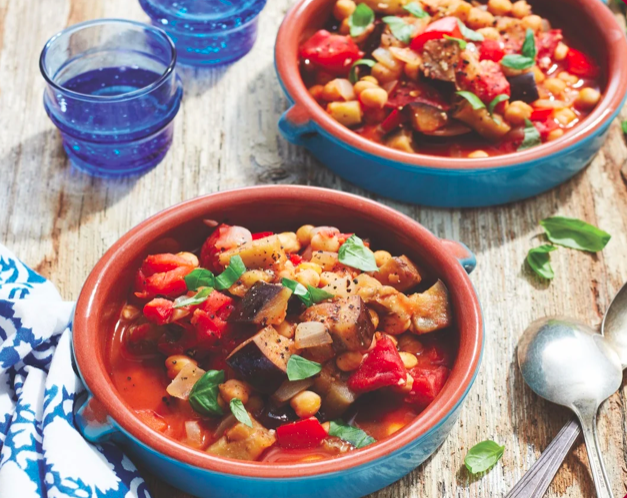
Instant Pot Eggplant Chickpea Stew
Instant Pot Eggplant Chickpea Stew. Eggplant has a reputation for being tricky to cook well — left to its own devices, it can turn spongy, bitter, or oddly slimy. Pressure-cooking solves that problem almost completely: the intense heat and moisture break the eggplant down quickly and evenly, turning it silky and almost creamy instead. A can of chickpeas gets stirred in for protein and heft, along with onions, garlic, and warm spices, making this a filling, meat-free option that doesn't feel like it's missing anything. It's an easy one to lean on for a meatless night without sacrificing the cozy, stick-to-your-ribs quality that makes fall stews so appealing in the first place.
Kid job: Before the eggplant goes anywhere near the pot, have kids help salt the sliced eggplant and let it sit for about 15-20 minutes — salting draws out excess moisture and some of the bitterness. Once it's had time to sweat, their job is to press or "squeeze-dry" each slice with a paper towel, blotting up the beads of moisture that rise to the surface. It's a genuinely fun sensory task — there's something satisfying about watching the water actually appear on a vegetable — and it's a simple, hands-on way to introduce the idea of osmosis without ever using that word. Younger kids can just enjoy the tactile process; older kids might get a kick out of understanding why it's happening, which opens the door to talking about how salt interacts with water in food more generally.

One-Pot Teriyaki Chicken and Rice. When there isn't time for a slow simmer, this is the stew to reach for. Chicken thighs cook right alongside rice in a single pot, coated in a glossy sauce built on soy sauce, fresh ginger, garlic, and a touch of sweetness — usually honey or brown sugar — that reduces down into a sticky, savory glaze as everything cooks. It comes together in a fraction of the time of a traditional stew, which makes it a solid weeknight option when the day's gotten away from you, and the familiar sweet-savory flavor tends to win over kids who might turn their noses up at a heartier beef or vegetable stew.
Kid job: Let them whisk together the sauce ingredients in a separate bowl before it goes anywhere near the pot — soy sauce, ginger, garlic, and the sweetener all get combined and whisked until smooth. This is a great low-stakes task since there's no heat or sharp tools involved, just coordination and a little arm strength. The real fun is in the taste-testing: have them dip a clean spoon in before and after adding each ingredient, and talk through what's changing. Does it taste too salty on its own? What happens once the sweetness goes in? Does the ginger add a little bite? It's a simple, safe way to introduce the idea that a good sauce is really about balance — sweet against salty against tangy — rather than any one flavor doing all the work.
Italian-Style Fall Stew. This one trades the heavier, gravy-thick base of a classic beef stew for something lighter and brighter — a tomato broth built up with white beans, hearty greens like kale or escarole, and Italian sausage or chicken for protein. Garlic, onion, and dried Italian herbs go in early to build the base flavor, while fresh herbs get added at the very end so their brightness doesn't cook away. It's a nice change of pace if you want the comfort of "fall food" without the richness — and it comes together in under an hour, since there's no long braise required to get tender results.
Kid job: Right before serving, let kids tear fresh herbs — basil, parsley, or whatever the recipe calls for — by hand instead of using a knife. It's a low-risk task with zero sharp edges, and there's something satisfying about the smell that comes off fresh herbs the moment they're bruised or torn. This is also a great moment to let them compare fresh herbs to the dried version used earlier in the cooking process: have them smell or taste a pinch of dried oregano next to a torn basil leaf and talk about how different the two are, even though they're "the same" plant. It's a simple, sensory way to introduce the idea that how an ingredient is prepared changes how it tastes — not just what it is.
Kitchen jobs by age, roughly speaking
Ages 3-5: Washing vegetables, tearing greens or herbs, pouring pre-measured ingredients into the pot, stirring with supervision.
Ages 6-9: Measuring with cups and spoons, peeling with a kid-safe peeler, cracking (or whisking) eggs, reading a simple recipe step aloud.
Ages 10+: Chopping soft vegetables with a supervised knife, browning meat under close supervision, timing steps, and helping plan the grocery list from the recipe.
Tips for cooking stew with kids on a busy schedule
Prep stations, not chaos. Set out pre-measured bowls of ingredients so kids can add things in order without a mid-recipe scramble.
Assign one job at a time. A single, clear task ("you're in charge of stirring") keeps things calmer than open-ended "help me cook."
Let mistakes be part of it. A lopsided carrot chunk or a slightly too-salty broth is a teaching moment, not a problem to fix before they notice.
Talk while you cook. Naming vegetables, asking what they think will happen when something simmers, or counting ingredients turns dinner prep into a low-key lesson.
The bottom line
Stew's slow, forgiving nature makes it one of the easiest ways to turn a weeknight dinner into real kitchen time with kids — a little math, a little science, a little food education, and a warm meal at the end of it that they helped make.