
The Zero-Concealment Debate: A New Front in American Education

The battle over American education is entering a new phase. For years, the national debate over school choice focused primarily on vouchers, education savings accounts, tuition assistance, and tax credits. In 2026, however, another issue has taken center stage: parental rights, student privacy, and the increasingly contentious question of how much families should know about their children's experiences at school.
Disputes over school policies, student records, and parental notification have moved beyond local school board meetings and into federal investigations, appellate courts, and the U.S. Supreme Court. The resulting legal and political conflict has intensified scrutiny of how educational institutions communicate with families and handle sensitive student information.
For some parents, these disputes reinforce concerns about institutional transparency and their ability to participate in decisions affecting their children. For educators and school administrators, they raise difficult questions about privacy, professional responsibilities, and the boundaries of parental access.
The consequences extend beyond traditional public schools. As families explore homeschooling, microschools, independent learning pods, private tutoring, and other educational alternatives, they are navigating an increasingly diverse landscape of providers, programs, and expectations.
The emerging debate can be described as a zero-concealment expectation: the belief that families should have meaningful access to the information they are entitled to receive about their children's education.
It is important to distinguish that expectation from a formal nationwide legal mandate. Federal and state laws establish specific rights and obligations, and not every record or communication is automatically subject to parental disclosure. Nevertheless, recent developments have brought transparency and trust to the forefront of the national education debate.
And as the number of educational options grows, a larger question is beginning to emerge: what happens when families seek greater control over their children's education but find that the information surrounding that education is increasingly fragmented?
The Legal Turning Point: Federal Scrutiny of Parental Access
The debate over parental rights and student privacy has produced several significant developments in 2026.
In January, the U.S. Department of Education announced that its Student Privacy Policy Office had found the California Department of Education in violation of the Family Educational Rights and Privacy Act, or FERPA, in connection with policies concerning the disclosure of student gender identity information to parents. The department called for corrective action and warned of potential consequences involving federal financial assistance.
The finding represents the federal agency's position in an ongoing legal and political dispute. It should not be interpreted as a judicial determination that every school policy involving student gender identity violates federal law.

In March, the U.S. Supreme Court issued an order in Mirabelli v. Bonta concerning California policies governing student gender identity and parental notification. The Court granted an application to vacate an appellate stay as to the parents involved, concluding that they were likely to succeed on their constitutional claims under the circumstances before the Court. The order was significant, but it was an interim ruling concerning the litigation—not a final nationwide decision resolving every question about parental access and student privacy.
The federal scrutiny continued through the summer. In August, the Department of Education issued guidance reminding federally funded educational agencies of their obligations under FERPA and the Protection of Pupil Rights Amendment, or PPRA. In October, the Departments of Education and Justice announced a joint initiative concerning parental rights and a new enforcement action involving the Los Angeles Unified School District.
These actions demonstrate that disputes over parental notification and student records are receiving attention at the highest levels of government.
They also illustrate why legal precision matters. FERPA generally gives parents the right to inspect and review their children's education records, subject to applicable requirements and exceptions. The PPRA addresses certain surveys, analyses, and evaluations involving sensitive information. Constitutional claims involving parental rights raise additional questions that depend on the facts and legal issues of each case.
The practical consequences of these disputes will continue to develop through agency proceedings, litigation, and state policy decisions.
For families and educators, however, the broader issue is already clear: expectations surrounding educational transparency are changing, and institutions are facing increased scrutiny over how they communicate with parents.
Sources: U.S. Department of Education's January 2026 announcement; U.S. Supreme Court, Mirabelli v. Bonta; U.S. Department of Education's August 2026 guidance; U.S. Department of Justice, October 2026 announcement.
Why Parental Trust Is Becoming Part of School Choice
School choice is often discussed as an economic issue. Can a family afford private tuition? Which educational expenses qualify for reimbursement? Can public funding follow a child to a different learning environment?
But families do not select an educational setting based on cost alone.
They also consider curriculum, teaching methods, class size, safety, communication, flexibility, and their ability to participate in decisions affecting their children. For some families, disagreements over school policies and access to information have become part of that decision.
Homeschooling allows parents to take a direct role in organizing their children's education. Microschools offer smaller learning environments and alternative approaches to instruction. Learning pods, independent tutors, online programs, and specialized educational services give families additional ways to customize a student's learning experience.

These options appeal to families for different reasons. Some want greater academic flexibility. Others seek individualized instruction, specialized support, or a learning environment that better fits their child's needs. Concerns about institutional policies and parental communication may also influence decisions.
It would be an overstatement to suggest that legal disputes over parental rights alone are driving a nationwide exodus from public schools. The growth of alternative education reflects a range of educational, financial, personal, and policy considerations.
Still, the transparency debate adds a new dimension to the conversation.
Families are not simply evaluating where their children learn. They are also evaluating the relationships, communication practices, and accountability standards that come with each educational option.
That shift matters because alternative education distributes responsibility across a much wider range of people and organizations than a conventional school model.
The Alternative Education Boom—and Its Hidden Complexity
Alternative education can give families considerable freedom to assemble a learning experience around a child's needs.
One student might complete reading and writing at home, attend a microschool for group instruction, receive advanced mathematics tutoring, participate in a science enrichment program, and take an online course for a specialized subject.
Another might combine a homeschool cooperative, educational therapy, extracurricular instruction, and independent curriculum.
This flexibility can be a major advantage. Families can select providers based on expertise, schedule, teaching style, and individual learning goals rather than relying exclusively on a single institution.
But every additional provider can introduce another system, another schedule, another set of records, and another communication channel.
A tutor may send progress updates through text messages. A homeschool cooperative may use spreadsheets to track attendance. An online learning platform may store assignments and grades in its own system. A microschool may maintain separate files for enrollment, payments, and academic progress.
Each provider may be functioning adequately on its own. The challenge emerges when the family needs to understand the student's overall educational experience across all of them.
Parents may have to assemble information manually, follow up with several providers, and reconcile records that were never designed to work together. A change in schedule, an incomplete progress report, or an overlooked communication can create additional uncertainty.
This is not necessarily a problem of deliberate concealment. In many cases, it is a problem of fragmentation.
Families may have more freedom to choose how their children learn while having to work harder to maintain a complete picture of that learning.
The Multi-Provider Tracking Blindspot
The administrative complexity of alternative education becomes particularly visible when a student receives instruction or services from several independent providers.
Consider a hypothetical student who attends a three-day microschool, works with a private mathematics tutor, completes an online science course, and participates in a weekly enrichment program.
The microschool maintains attendance records. The tutor tracks lesson progress in a private document. The online course records assessments through its learning platform. The enrichment provider communicates with the family through email.
No individual provider necessarily has a complete view of the student's learning experience. And no single record system necessarily brings the information together.

Parents may be responsible for tracking attendance across programs, monitoring assignments, keeping copies of progress reports, managing schedules, and ensuring that educational goals remain aligned.
For educators, the same fragmentation can create repetitive administrative work. Independent providers may spend time responding to requests for information, recreating records, documenting sessions, and organizing invoices across multiple tools.
The problem becomes more consequential when families use education savings accounts or other publicly funded school-choice programs. Depending on the state and program, families and providers may also need to understand eligible expenses, documentation requirements, reimbursement procedures, and purchasing restrictions.
The result is a complicated environment in which educational delivery, recordkeeping, purchasing, and communication may be spread across several unrelated systems.
The freedom to choose different providers does not automatically create a coordinated educational experience.
The Administrative Burden on Microschools and Independent Educators
Microschools and other small educational providers are often built around a simple premise: smaller learning environments can offer more personal attention, flexibility, and community involvement.
Yet running a small education business involves much more than teaching.
Founders may need to manage enrollment, scheduling, attendance, curriculum, family communications, tuition, purchasing, business records, and compliance obligations. Those responsibilities can be especially demanding when the provider has limited administrative staff.
Research from the National Microschooling Center illustrates the scale of this challenge. Its American Microschools 2026 Sector Analysis, which examined 1,000 microschools across all 50 states, Washington, D.C., and Puerto Rico, reported that microschools spend an average of nearly 100 hours annually on compliance-related tasks.
The same report found that approximately half of the microschools surveyed had families receiving funding through state school-choice programs, while three in five relied primarily on tuition paid by families.
These findings highlight the variety of financial and operational arrangements within the sector. They also show that small providers must navigate administrative responsibilities alongside their educational work.
The challenge is not limited to regulatory compliance. Families may expect clear information about schedules, attendance, learning progress, payments, and educational goals. Providers must determine how to maintain and share that information appropriately without allowing administrative tasks to overwhelm their core mission.
As the alternative education sector becomes more diverse, these operational demands become harder to treat as incidental.
Student Privacy and Transparency Are Not the Same Thing
The push for greater transparency raises an important distinction: giving parents appropriate access to information is not the same as making every piece of student information universally available.
FERPA, for example, establishes rights concerning education records maintained by covered educational agencies and institutions. Its application depends on the nature of the records, who maintains them, and the circumstances involved. It does not automatically apply in the same way to every independent tutor, private business, or educational service.
Other federal and state privacy laws, contractual commitments, and professional obligations may apply depending on the provider and the type of information involved.
Alternative education can make these questions more complicated because a child's educational experience may span organizations with different responsibilities and policies.
A family may receive a progress report from a tutor, a learning assessment from an online provider, and attendance information from a microschool. Each provider may maintain its own records under different rules and practices.
Families need to understand what information they can reasonably expect to receive, how to request it, and who is responsible for maintaining it. Providers need to understand their own obligations, including the limits on collecting, using, and disclosing sensitive information.
That is why the current debate should not be reduced to a simple conflict between secrecy and disclosure. Trustworthy education requires both meaningful transparency and responsible privacy practices.
When expectations are unclear, families can feel excluded, providers can become uncertain about their responsibilities, and the administrative process can become unnecessarily difficult.
From Institutional Secrecy to Information Fragmentation
The national debate over parental rights has focused attention on allegations that certain educational institutions withheld information from families. Those allegations must be assessed according to the applicable laws and the facts of each case.
But a separate challenge exists outside those disputes.
In alternative education, information may be difficult to obtain or coordinate even when no provider is deliberately withholding it. Records can be scattered across email threads, messaging applications, spreadsheets, paper documents, learning platforms, and independent business systems.
The difference is important. Deliberate nondisclosure may raise legal or policy questions; fragmented information may reflect operational limitations. Treating the two as identical would obscure the causes and the appropriate responses.

Nevertheless, both situations can affect how families experience educational transparency.
Parents may have difficulty understanding a child's overall progress when each provider reports information differently. They may struggle to keep track of learning goals across programs or identify which provider maintains a particular record. Independent educators may spend additional time answering questions and locating information that already exists somewhere in their workflow.
As education becomes more distributed, families and providers are increasingly required to coordinate information across organizational boundaries.
The underlying question is no longer simply whether information exists. It is whether the people who need appropriate access can find, understand, and use that information without excessive friction.
A Growing Education Landscape With Unresolved Questions
The expansion of school choice and alternative education is creating a more diverse educational marketplace. Families can combine traditional schooling, independent instruction, digital learning, specialized services, and educational materials in ways that would have been difficult to coordinate in the past.
That flexibility creates opportunities for students and educators, but it also introduces new questions about how the pieces fit together.
How do families maintain a clear picture of learning when instruction comes from several providers? How do small education businesses handle growing administrative expectations without sacrificing teaching time? How can records remain accurate and accessible while sensitive student information is protected? And how do families navigate purchasing and documentation requirements when educational expenses come from different sources?
These questions do not have one universal answer. Their significance varies by family, provider, state, and funding arrangement.
But they point toward a broader challenge: educational choice is expanding faster than many families' and small providers' existing administrative practices were designed to accommodate.
The National Microschooling Center's findings on compliance burdens offer one measurable example. Legal disputes over parental access provide another lens through which to examine expectations around communication, accountability, and trust.
Neither proves that every family or provider needs the same type of system. Together, however, they illustrate why the operational side of alternative education deserves greater attention as the sector evolves.
The Next Chapter of Educational Freedom
The debate over parental rights and student privacy has become a defining issue in the wider conversation about American education. Federal investigations and court proceedings have placed renewed attention on the relationship between families and educational institutions, while the growth of homeschooling, microschools, and other learning arrangements is changing how education is organized in practice.
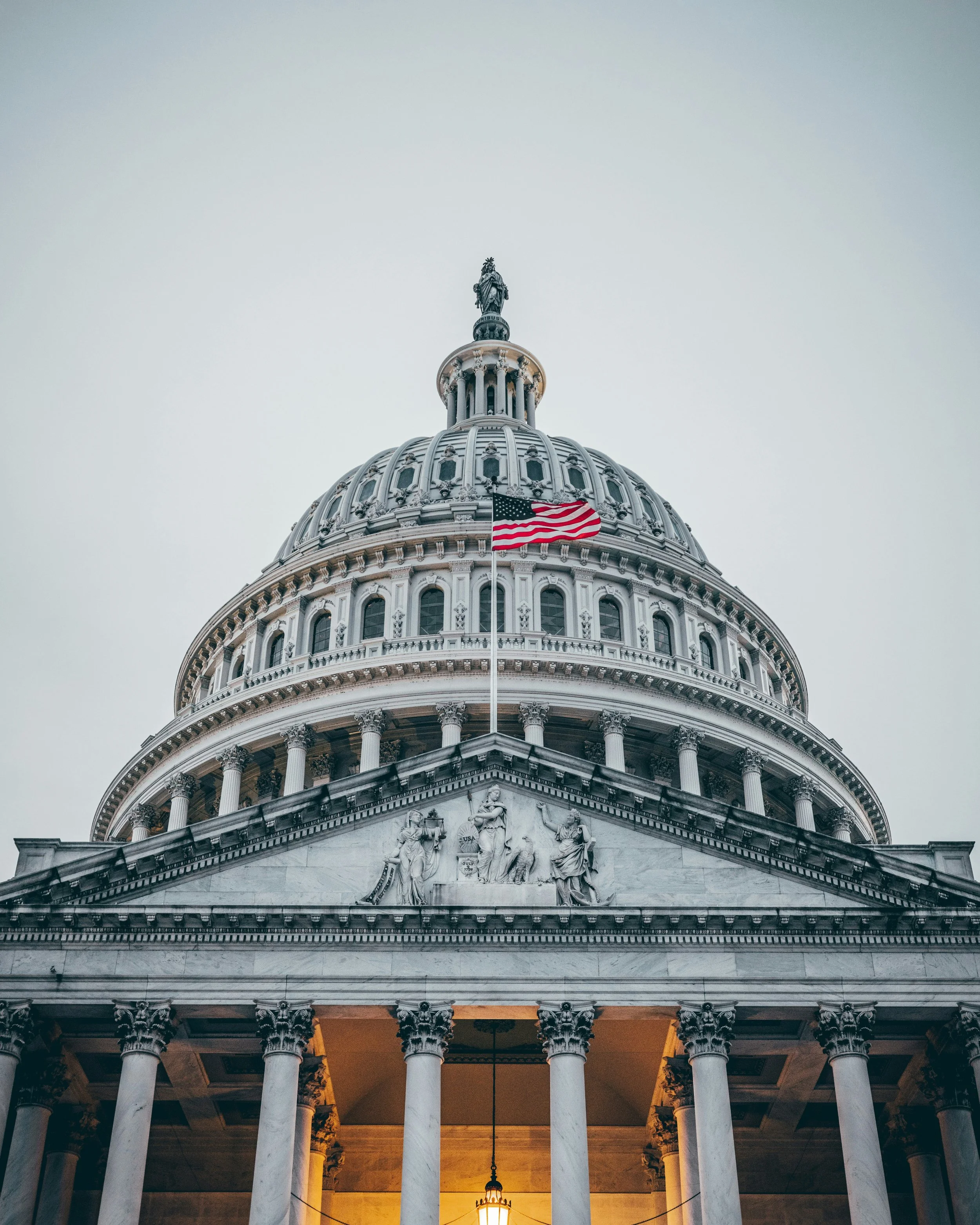
For families, educational freedom can mean greater control over curriculum, teaching methods, learning environments, and the providers involved in a child's development. For educators, it can mean the ability to create more specialized programs and serve students in more flexible ways.
But freedom also introduces coordination challenges. When learning takes place across several organizations, responsibilities become distributed, records become fragmented, and families may have to take on more of the work that a single institution once handled internally.
The central challenge is not simply to offer more educational choices. It is to ensure that families and educators can navigate those choices with clarity, accountability, and confidence.
The future of alternative education will be shaped not only by where students learn, but also by how families, providers, and institutions maintain trust when learning is spread across multiple settings.
As the sector continues to grow, the administrative infrastructure surrounding education may become just as consequential as the educational options themselves. The unresolved question is whether the systems supporting this increasingly diverse landscape can keep pace with the expectations placed upon them.
That is the tension at the heart of the zero-concealment debate: families want meaningful involvement, educators need workable processes, and educational freedom increasingly depends on the ability to coordinate information and responsibilities across a fragmented landscape.
Editor's Note: The debate over parental rights, student privacy, and educational transparency continues to evolve through federal policy, state legislation, and court proceedings. This article examines the broader implications of these developments for families, educators, and the growing alternative education sector. Legal disputes and regulatory requirements vary by jurisdiction, and allegations or agency findings should not be interpreted as universal legal conclusions. Our focus is on the larger questions of trust, accountability, and the challenges of navigating an increasingly fragmented educational landscape.
Sources & Further Reading
U.S. Department of Education. Federal finding concerning California's policies on parental access to student information. January 2026.
Supreme Court of the United States. Mirabelli v. Bonta — Court order and case materials. March 2026.
U.S. Department of Education. Student Privacy Policy: FERPA legal basics. Guidance on parental access to education records and student privacy.
U.S. Department of Education. Parental rights and student privacy guidance. August 2026.
U.S. Department of Justice. Federal announcement concerning parental rights and educational transparency. October 2026.
National Microschooling Center. American Microschools 2026 Sector Analysis. Research on microschool operations, compliance responsibilities, and the alternative education landscape.
Sources are provided for readers who wish to review the underlying legal materials, government announcements, and sector research. Legal proceedings and regulatory requirements may evolve; readers should consult the original documents for the latest information.