
Federal lawsuits, parental complaints, and proposed legislation are intensifying a national debate over student privacy, school transparency, and parents' rights to know what happens to their children in public schools.

WASHINGTON, D.C. — Public school policies governing student gender identity and parental notification are facing renewed legal and political scrutiny as lawsuits and civil rights complaints bring the issue into the national spotlight.
Four public school districts—Pennsbury and Pine-Richland in Pennsylvania, and Albuquerque and Santa Fe in New Mexico—have become focal points in a growing national debate over whether schools should be permitted to accommodate students' gender identities without notifying their parents.
The developments come amid a broader effort by the Trump administration, congressional Republicans, and parental rights organizations to strengthen parental access to student information and challenge school policies that allow students to use different names or pronouns at school without parental knowledge.
Together, these cases highlight an increasingly consequential question for American education: Where should the line be drawn between student privacy, parental authority, and a school's responsibility to support its students?
Pennsylvania Districts Face Growing Legal Challenges
In September 2026, Liberty Counsel filed a federal complaint with the U.S. Department of Education on behalf of parents alleging that Pennsbury School District in Bucks County, Pennsylvania, facilitated their daughter's social transition at school without their knowledge or consent.
According to reporting by The Philadelphia Inquirer, the complaint alleges that district employees used a male name and pronouns for the student for nearly three school years.
The parents allege that school personnel used the student's male identity in personal interactions and electronic information systems, and that the family did not discover the extent of the school's actions until the end of their daughter's junior year.
The complaint asks federal officials to investigate potential violations of the Family Educational Rights and Privacy Act (FERPA), the Protection of Pupil Rights Amendment (PPRA), and Title IX.
These allegations have not been established as violations of federal law. Pennsbury declined to comment on the specific allegations when contacted by The Philadelphia Inquirer.
The dispute is not limited to Pennsbury.
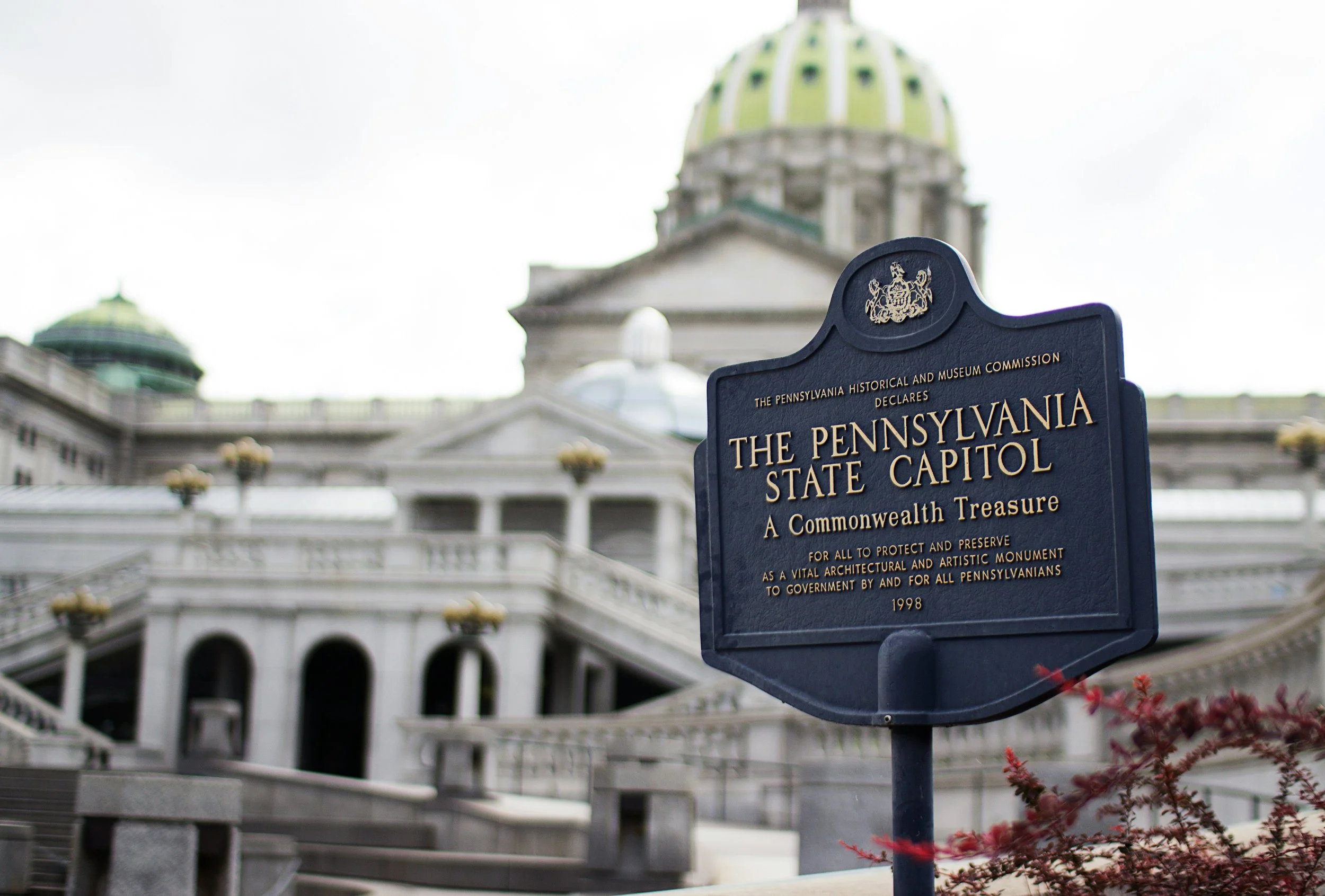
Pine-Richland School District, also in Pennsylvania, is facing a separate legal challenge over its Administrative Regulation 103(B), which governs how school personnel respond to students who identify as transgender.
The policy has been challenged by parents represented by America First Legal. According to the litigation, the district's Student Support Teams can include principals, counselors, nurses, and school psychologists who work with students on gender-related support plans.
The policy also addresses the use of preferred names and pronouns and the circumstances under which information about a student's transgender status may be disclosed to parents.
The case has produced a significant appellate development. On April 23, 2026, the U.S. Court of Appeals for the Third Circuit reversed part of a lower court's decision, allowing the parent's claim for damages to proceed while finding that the plaintiff lacked standing to pursue prospective relief under the circumstances presented.
On October 29, 2026, America First Legal and its partners filed an amended complaint, continuing the legal challenge.
America First Legal's October 30 announcement and case documents provide additional details about the litigation.
The case illustrates how disputes over school gender identity policies are increasingly moving beyond local school board meetings and into federal courts.
New Mexico Schools Become Part of the National Debate
New Mexico has also become a focal point in the debate over parental notification and school gender identity policies.
In Albuquerque, a public school employee has filed a federal lawsuit challenging district policies concerning transgender and gender-nonconforming students.

On September 17, 2026, the Center for American Liberty filed a lawsuit on behalf of Jeanette Martinez, a licensed clinical social worker employed by Albuquerque Public Schools.
Martinez alleges that the district's policies require her to withhold information about students' gender identities from their parents, raising concerns about compelled speech and violations of her First Amendment rights.
The lawsuit specifically challenges APS Procedural Directive PJ30, which addresses the use of students' requested names and pronouns and the handling of gender identity information when communicating with parents.
The Center for American Liberty's case announcement and original court filings provide additional information.
The lawsuit represents the employee's allegations, not a judicial finding that the district violated federal law.
In Santa Fe, parental concerns have also prompted changes to district policy.
Santa Fe Public Schools revised its Gender Support Plan procedures in August 2026. Under the revised Administrative Regulation 330, parental participation is required when a student seeks to have a preferred name or gender marker entered into the district's student information system.
However, the revised policy continues to direct school employees to use a student's requested name and pronouns in daily interactions, regardless of whether those changes have been entered into the student information system.
New Mexico Sentinel's September 23 reporting details the policy changes and continuing concerns raised by parents.
The developments in both New Mexico districts demonstrate how the national debate is influencing local school governance, even as legal questions remain unresolved.
Anne Arundel Lawsuit Signals Federal Enforcement Escalation
The federal government's actions in Maryland provide another important piece of the developing national picture.
On October 27, 2026, the U.S. Department of Justice announced a lawsuit against the Board of Education of Anne Arundel County, alleging that its policies allowed school employees to facilitate students' social transitions without parental knowledge or consent.
According to the Justice Department's complaint, school personnel were instructed to solicit, document, and act upon students' preferred names, pronouns, and gender identities while withholding certain information from parents.
The federal government argues that these practices interfere with parental rights under FERPA and PPRA.
The complaint also describes a family who allegedly learned that school staff had been using a masculine name and pronouns for their daughter after receiving communications from teachers. The parents claim the school initially denied facilitating the changes.
Anne Arundel County Public Schools has disputed the government's allegations, stating that it believes its policies comply with federal law.
The lawsuit marks a significant escalation because it moves the dispute beyond administrative complaints and into direct federal litigation.
Read the Department of Justice's October 27 announcement and the original federal complaint.
What Do FERPA and PPRA Actually Require?
At the center of many of these disputes are two longstanding federal education laws.

The Family Educational Rights and Privacy Act (FERPA) generally gives parents the right to inspect and review their children's education records while the student is under 18, subject to statutory exceptions. Rights generally transfer to students when they turn 18 or attend a postsecondary institution.
The law regulates access to and disclosure of education records. However, it does not explicitly establish a universal parental-consent requirement for every school interaction involving a student's name, pronouns, or gender identity.
The U.S. Department of Education's FERPA guidance explains parents' rights to inspect and review educational records and the circumstances under which those rights apply.
The Protection of Pupil Rights Amendment (PPRA) provides parents with certain rights concerning surveys, the collection of sensitive personal information, and specified student examinations and activities.
Its consent and notification requirements depend on the type of survey or activity involved.
The Department of Education's official PPRA guidance outlines the law's protections and the eight categories of sensitive information covered by its survey provisions.
The Trump administration's legal position is that certain school policies improperly use student privacy classifications to prevent parents from accessing information they are legally entitled to receive.
Critics of that approach argue that student confidentiality policies can serve an important protective purpose, particularly when school personnel believe disclosure could expose a student to hostility, rejection, or harm at home.
The resulting legal questions extend beyond a disagreement over pronouns. They involve the interpretation of federal privacy statutes, constitutional parental rights, student safety, and the authority of local school districts.
Congress Considers a National Parental Consent Requirement
While federal agencies pursue enforcement actions and families challenge school policies in court, Congress is also considering legislation that could establish a nationwide standard.
The Stopping Indoctrination and Protecting Kids Act (H.R. 2616) would require public elementary and middle schools receiving federal funding under the Elementary and Secondary Education Act to obtain parental consent before changing a minor student's gender markers, pronouns, or preferred name on school forms, or making certain sex-based accommodations, including access to bathrooms and locker rooms.
The House passed the legislation in May 2026, and the measure was subsequently received in the Senate and referred to the Senate Committee on Health, Education, Labor, and Pensions.
As of November 2026, the measure has not become law.
If enacted, the proposal would establish a federal parental-consent requirement in areas currently governed by a combination of federal statutes, state laws, and local school district policies.
Read the full text and legislative history of H.R. 2616 through GovInfo.
Its potential reach makes the legislation an important development for families, school administrators, and education policymakers nationwide.
A Larger Question for Public Education
The disputes unfolding in Pennsylvania, New Mexico, and Maryland reflect a broader national disagreement over who has the authority to make decisions concerning children's education, personal development, and well-being.
For parents advocating greater transparency, the central concern is whether schools can make consequential decisions about a child's social identity while excluding families from the process.
For student privacy and LGBTQ+ advocates, the concern is whether mandatory disclosure policies could expose vulnerable students to unsafe situations or discourage them from seeking support from trusted adults at school.
School districts are increasingly being asked to navigate competing expectations from parents, students, state governments, federal agencies, and the courts.
The outcome of these legal challenges could have lasting implications for school board policies, parental access to educational records, and the future of student privacy protections in public education.
As federal investigations, court proceedings, and congressional proposals continue, one issue is becoming increasingly difficult for public schools to avoid: How should schools balance parental rights, student privacy, and their responsibility to protect the children entrusted to them?